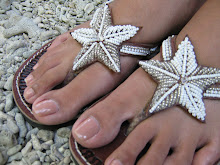
Just a quick post…my sister-in-law needs help in coming up with a brand name and logo for a yoga-inspired clothing line she’s developing for Certified Calm, a shop in the Shang mall. She’ll be using all-natural fabrics like linen and cotton as well as indigenous materials like rope, stones and shells for embellishments. Hope you can post your suggestions here. C'mon, I know we can think of something better than "Lulu" or "karma" or "prAna" or "be present"...you get the picture.
Lya, my sis-in-law, is a fashion designer trained in Paris and New York. She ran a boutique in Greenbelt in the ‘90s and sold a line of ready-to-wear apparel in Rustan’s. Today you’ll mostly find her designing wedding ensembles from her atelier in Libis and practicing Bikram in Greenhills. Lya is currently training for a yoga competition this November which she is inviting me to participate in. “There’s no competition in Ashtanga, practise is personal and not a contest,” I said. Right?
Bikram has been visibly effective for Lya who has lost weight significantly since she got hooked last year. She has been persuading me to try Bikram but I have been lured more by the grace, power and elegance of Ashtanga. Besides since I began my yoga journey in March, I’ve already shed 8 lbs with Ashtanga (not that weight loss is my goal).
Anyway since this blog is dedicated to Ashtanga, this Bikram post has a purpose here. Below is a video of esteemed Bikram instructor and 2005 Bishnu Charan Ghosh cup winner Esak Garcia demonstrating poses from the Advanced Bikram routine now being introduced in Bikram studios in the country.
See how many Ashtanga asanas you can identify from the Advanced Bikram routine. For those consulting Ashtanga books, there is no need to look further than the Ashtanga primary and secondary series. {Note: Ashtanga is a progressive practice that begins with theYoga Chikitsa or primary series; followed by Nadi Shodana or intermediate series which brings the ashtanga vinyasa practice from a physical to more energetic levels; then comes Sthira Bhaga or the advanced series A described as “transcending gravity”; finally, the advanced series B elevates the practice to greater heights.}
The advanced series of Bikram postures makes a quantum leap from the original set of 26 poses. Here, the most classic of all yoga poses, Padmasana or lotus position, is introduced with a number of variations. Bikram practitioners also get a taste of Sirsasana or headstands and full backbends in the advanced series. You can view the basic Bikram poses at the Bikram's Yoga College of India website. The school is located in Los Angeles, California and was established as a global headquarters.


 I also prefer Thai massage more than the popular Swedish or Aromatherapy variety because no oil is applied and you are fully dressed in loose clothing. A typical Thai massage is done on a padded mat on the floor and usually lasts from 60 minutes to two hours. Except for the ambient music they played and the green tea that was served after my massage, this type of therapy dispenses with all other spa treats such as scented oils, terry cloth robe, a sauna and hot shower so it's competitively priced at only P250! I also discovered on their website that they have a branch right on the street where my shala is located.
 I must say that yoga does seem to prep the body for climbing. All the Chaturangas in the primary series really gave us the strength to pull our weight up the walls. The flexibility we’ve developed in yoga also helped us stretch and reach our limbs out for those tiny faraway rocks.